The problem
Over 2 million older people in the UK struggle with mobility, which turns a weekly food shop into a strain: lifting heavy items, bending down to a trolley and hunting for things in a big store. Many stop going, and lose an independent task and a social outing along with it. Supermarkets lose out too, with customers they can't serve and no assistive option that scales.
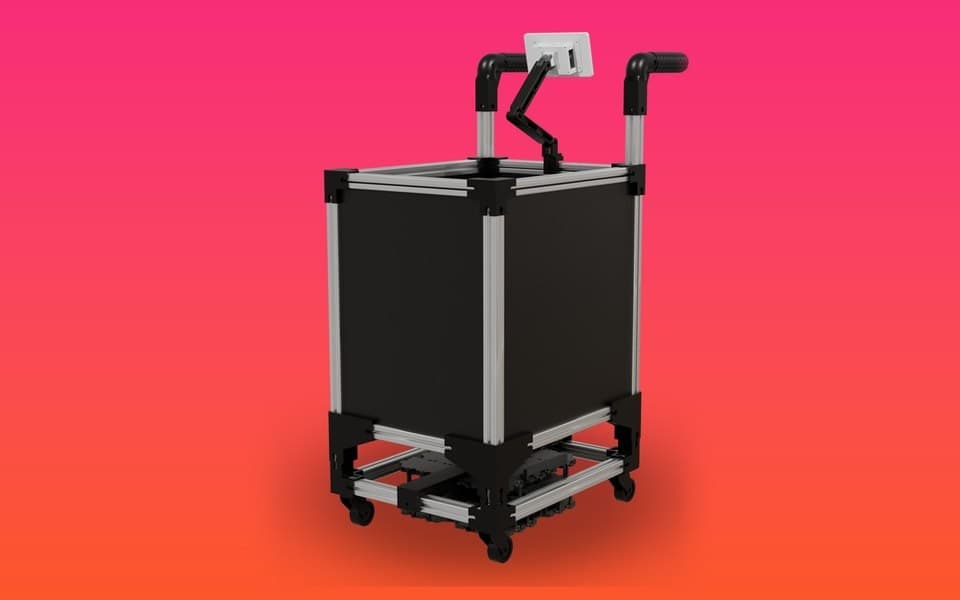
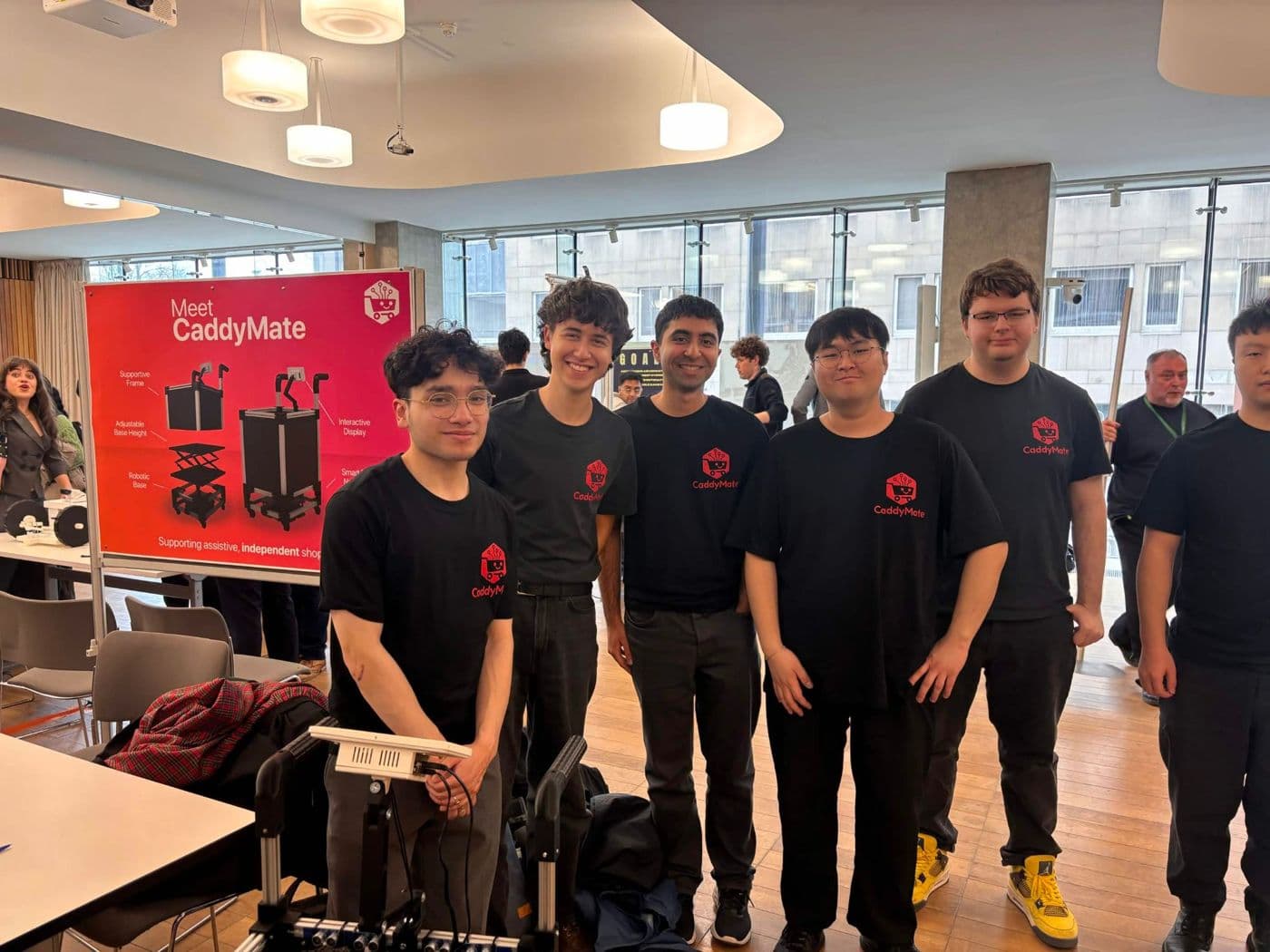
CaddyMate is our answer: an assistive shopping trolley that supports you as you walk, guides you to each item and brings your shopping up to you. It was built by a team of 8 for our System Design Project, and won Amazon's Runner-Up Prize.
How it works
- Pick an item. A 7-inch touchscreen on an adjustable arm lists the store by category, with search by touch or by voice, all in large, simple controls.
- Follow the route. The trolley knows the store from a SLAM map and plans a path to the item with ROS 2 and Nav2, showing it live on the screen.
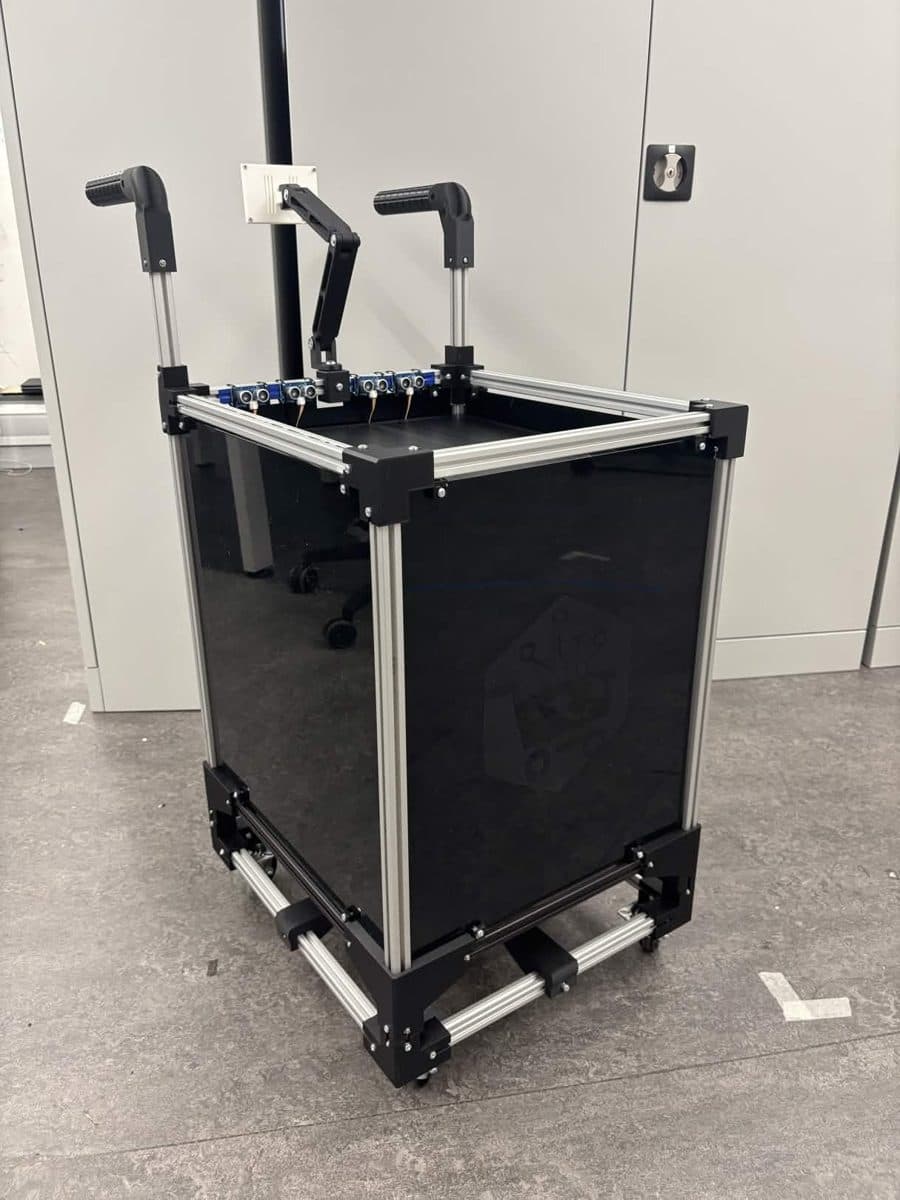
- Lean on it. Two textured handles on a rigid aluminium frame give steady support while walking.
- No bending. A scissor-lift base raises the shopping to hand height, so nothing has to be lifted from the bottom of a deep basket.
My approach
- The supportive frame. I modelled every part of the frame in Autodesk Inventor, apart from the screen arm, and 3D-printed them.
- Fitting it together. I prototyped the hooks that attach the TurtleBot robotic base to the frame, and laser-engraved the CaddyMate logo onto the acrylic walls.
- Ergonomic handles. I prototyped grips in rigid PLA and flexible TPU, trying different textures and shapes until they were comfortable to hold and lean on.
- Holding the team together. As assistant project manager, I was the technical bridge between the frame, lifting base and robotics teams, making sure their parts fitted together physically and in the plan.
Results
In testing, 93% of users found CaddyMate easy and intuitive to use and navigate, and it reached its target in 100% of end-to-end trials. At the industry day it won Amazon's Runner-Up Prize. The code for the screen and navigation is on GitHub (opens in a new tab).
What I learned
- Designing for older users means designing for comfort first. A grip that feels fine for a minute can hurt after a whole shop, so I only trusted prototypes people had actually held and leant on.
- 3D printing makes it cheap to be wrong. Printing a handle in PLA and in TPU and comparing them in hand settled questions faster than any amount of modelling.
- In a team of 8, the hard part is the joins. Parts made by different teams only fit if someone keeps checking the measurements and the plan line up.